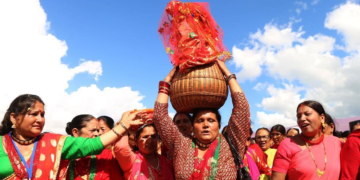
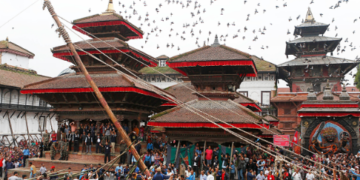
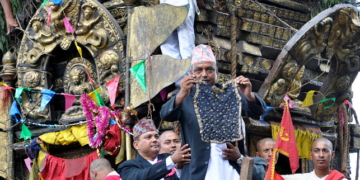
The Ghatanmug Chaturdashi festival, also known locally as “Gathanmug: Cha-he,” is celebrated by the Newar community in Nepal every year on the 14th day of the dark fortnight of the month of Shrawan according to the Nepal Sambat calendar. On this day, an effigy of Ghantakarna made from dried grass is immersed in a river in the evening.
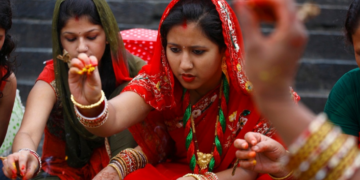
This festival, which focuses particularly on cleanliness, marks the completion of the agricultural work for the rainy season. People clean their homes thoroughly and take a bath early in the morning. They sprinkle holy water on every corner of their house to purify it. It is customary to apply henna to the hands and wear an iron ring on this day. This festival, which is believed to be rooted in pre-Aryan civilization and related to spirituality, is believed to complete the worship of witches at midnight. It is said that people wear iron rings to stay away from evil spirits, witches, and other supernatural powers.
In the old settlements of Kathmandu, there is a tradition of making an effigy of Ghantakarna and parading it around the city. The person representing Ghantakarna is smeared with colorful makeup and is given food meant for ghosts. Similarly, different Newar settlements in Bhaktapur have their own distinct traditions of making and immersing the effigy of Ghantakarna. In Bhaktapur, the effigy made of dried grass and straw is burned, while in places like Thimi and Bode, it is dragged through the streets and set on fire before being immersed in a nearby river.
Highlightes:
- Significance: The festival marks the end of the agricultural season and is associated with spiritual practices to ward off evil spirits.
- Rituals: Cleaning homes, applying henna, wearing iron rings, and immersing the effigy of Ghantakarna are some of the key rituals.
- Beliefs: The festival is deeply rooted in pre-Aryan civilization and is connected to the worship of witches and other supernatural powers.
- Regional Variations: Different Newar communities have unique traditions associated with the festival, including the manner in which the effigy is made and disposed of.