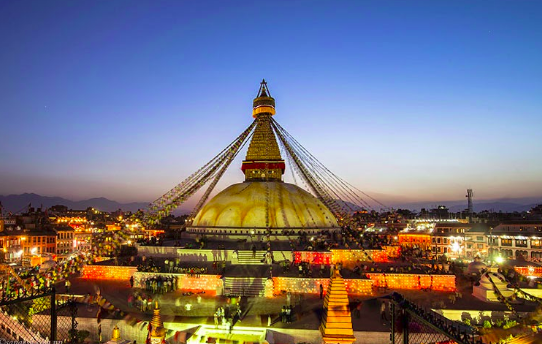
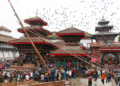
World Heritage site, Boudhanath Stupa is one the place in the capital to explore the Architectural Art and design. Boudhanath is a perfect area around the busy Kathmandu to achieve the sound and chill environment. The iconic eyes of Buddha placed in the tower like structure in white dome always pass the air of true color of Kind, Peace, Joy, and Enlightenment. Boudhanath Stupa is also named as Khasa Chaitya.
In 1979, UNESCO listed Boudhanath Stupa as the World Heritage site. Boudhanath Stupa is the place of true Buddhist devotees. The Lama’s and Buddhist from all around the world visits takes memory, explore the architectural design and art called Thanka. The stupa is one of the largest stupas in the town, that holds the importance and principle of Lord Buddha.

Boudhanath Mythology:
King Vikramaditya once stood the palace and prepares to build Dhunge Dhara in the southern part of Palace. But this part of the palace does not shows the sign of water. So, the king consults with Astrologers about this issue and he suggested to sacrifice Humans (Male) having Battis-Lakshanas or thirty-two perfections. King himself and his one of two sons are ready to sacrifice their life. The head during the sacrifice flew off to place near to Sankhu Bajrayogini Temple. After that, the prince flew the hen from top of Bajrayogini and decided to build the stupa where the Hen lands. So, Boudhanath Stupa is currently standing in the place where Hen lands. Initially, people started naming the places as Khasti, later turned into Boudhanath (reflecting the Hindu country).

History:
As per the Gopalarajavamsavali, the stupa Boudhanath is built by Licchavi King Sivadeva in 590-604 CE. There are tons of facts written in the Chronicles of the Newars. So, overall in around 14th century, the Boudhanath Stupa was built. For the detail information: Click Here

Boudhanath Stupa: Architectural Art and Design
After the 2015 Earthquake, the Boudhanath Stupa was renovated. The design of the stupa remains the same but actual material used to paint these designs are renovated.

The fact behind the structure of Boudhanath stupa is, the plinth at the bottom of stupa means earth, the Dome (Kumbha) is a water, the square tower (Harmika) represents fire, the spire represents the air and the umbrella placed at the top of the tower represents ether or void. The tower-like structure got the 13 tier and each tier represents the life of Devotees that needs to climb in order to achieve nirvana.
At the base of the stupa, there are 108 small images of Dhyani Buddha Amitabha and the prayer wheels that are used around while rounding the stupa.
Top Sights in Boudhanath:

Explore Nepalese art “Thanka”:
Thanka is the type of art painted on cotton, silk appliqué that usually depicts a Buddhist deity, scene or Mandala. So, the area around Boudhanath Stupa is a popular place for these kinds of art and design. You can visit around and can have a deep look to explore more about these kinds of arts, its importance and much more fact about it.
Traditional Crafts:
While rounding the Boudhanath Stupa, you will find the shop where traditional crafts were kept in sold. These all crafts are hand-made and you can order to take the favorite traditional crafts. These traditional crafts usually reveal the fact something about Buddhist culture.
Exploring Gumba:
The stupa is surrounded by Gumba, which is the perfect place to achieve peace and stay away from the busy Kathmandu. Anyone can get access to enter into these Gumbas and explore the knowledge of Buddhist culture. Shechen Gumba, Khawalung Gumba, Kopan Gumba, Thrangu Gumba, Dilyak Gumba, Pullahari Gumba, etc, are the top Gumba you can explore around.
Roof Top View:
There are lots of Hotels surrounded from where you can view the and take a perfect snapshot with the stupa alongside. Some of these Hotels offers you the free entry to view the Boudhanath stupa from top. The night view of Boudhanath is even more alluring and eye-pleasing.
How to get into Boudhanath Stupa:
The stupa is in the center of the valley. Once you landed into TIA airport or any Buspark of the valley, you can either take a taxi (locally available) or take a local bus that routes the way to the Boudhanath gate.