Dhorpatan Hunting Reserve is the only Hunting Reserve of Nepal and is priorly recognized as a hunting site in 1987. This hunting site is spread over 1352 square kilometer and area ranges through an altitude from 2850m to 5500m. The border of this hunting site touches three districts of western Nepal Rukum, Myagdi, and Baglung.

Department of the National Park and Wildlife Conservation, announced the Dhorpatan conservation area as a Hunting site just to facilitate Hunters to enjoy hunting, to preserver a representative hight altitude ecosystem in western Nepal and make this land be common habitat of different species.
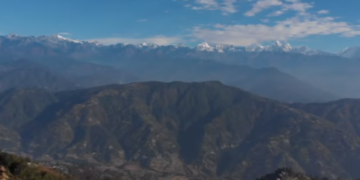
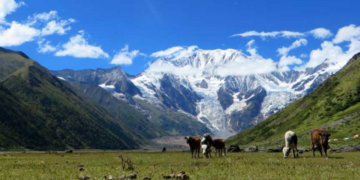
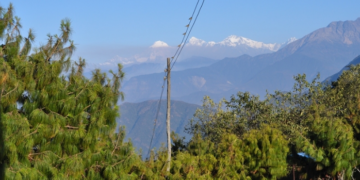
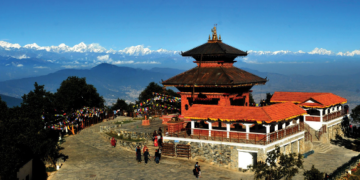
The site is not popular for the wild species or creatures, rather it is also the land of different flora and fauna. According to Wikipedia, this hunting site has 36 endemic species, 18 mammal species, and 137 bird species. The endangered species spotted in this hunting sites are Snow Leopard, Musk Deer, Red Panda, Blue Sheep, Koklass Pheasant, Cheer Pheasant, and impeyan pheasant, etc. The site includes the dense forests, flat meadows (known as Patan), and marshland (called dhor). The spectacular view of Mt.Dhaulagiri, Mt.Annapurna, and Mt.Manaslu through this point is much clear and shining. And probably these mountains remain snow-covered throughout the year.
Hunting Blocks inside the Dhorpatan Hunting Reserve
In order to make Hunters easy to Hunt animals, the Dhorpatan conservation separates out the 7 Hunting blocks inside the sites. And for each Block, Hunters are allowed to hunt the specific species only. These 7 hunting blocks are:
Note: You are allowed to hunt in only either Southern Part or in Northern Part of Hunting site.
Hunting Blocks in Southern Part of Reserve
- Phalguna: Bluesheep and Himalayan Tahr
- Barse: Bluesheep
- Gutsang: Bluesheep and Himalayan Tahr
- Surtibang: Himalayan Tahr
Hunting Blocks in Northern Part of Site
- Seng: Bluesheep and Himalayan Tahr
- Dogadi: Bluesheep and Himalayan Tahr
- Sundaha: Bluesheep and Himalayan Tahr

Best Time to Go for Hunt in Dhorpatan Hunting Reserve
On our recommendation, the best time to visit Dhorpatan Hunting Reserve is in the month between March to April. During the Summertime, you might get stuck due to the heavy rainfall and too Hot climatic condition. Also, during the Wintertime, you might get stuck due to too low temperature and during this time the strong wind also blow in this region. So, It’s better you probably don’t plan any itinerary to Hunting Sites. Also during the time period of March to April, there is also a high chance to spot some endangered animals.
How to Reach Dhorpatan Hunting Reserve
There is no direct road connection available from Kathmandu to Dhorpatan Hunting Site. You need to catch a bus from Kathmandu to Tansen, and from Tansen, you can enjoy 3-day of trek to Hunting Site
You can even catch the regular flight from Kathmandu to Pokhara and from Pokhara, you can enjoy a 4-day trek via Baglung to reach Hunting site.
You can even book the Chartered Helicopter to reach the Hunting site. On doing this, you don’t need to worry about trekking.
Trek Route from Kathmandu to Dhorpatan Hunting Site
Kathmandu -> Beni -> Darbang -> Dharapani -> Lamsung -> Jaljala -> Dhorpatan
Hotels in Dhorpatan Hunting Site
You will find plenty of Hotels, Lodge, and Restaurant in the way to Dhorpatan Hunting Site. In order to find the best hospitality and accommodation service you need to drive back to Beni. On the seasonal time, finding the hotels and lodge in this region might be difficult for you. Some of the Hotels available in this region are:
| Hotels | Average Price Per Night |
| Blue Sheep Inn | NPR.1137 |
| War Tourism Village House | NPR.313 |
| Hotel Dolphin | NPR.568 |
| Hotel Yeti | NPR.853 |
Conclusion
So, if you are fond of trekking and want to experience Hunting in life, you just need to visit Dhorpatan Hunting Reserve once in a life. Hunting in other sites is illegal, so you must prepare the trip to Dhorpatan. The best preferable time for you to visit Dhorpatan is during the time period between March to April. You will have a beautiful time to get around with the wild creature.